
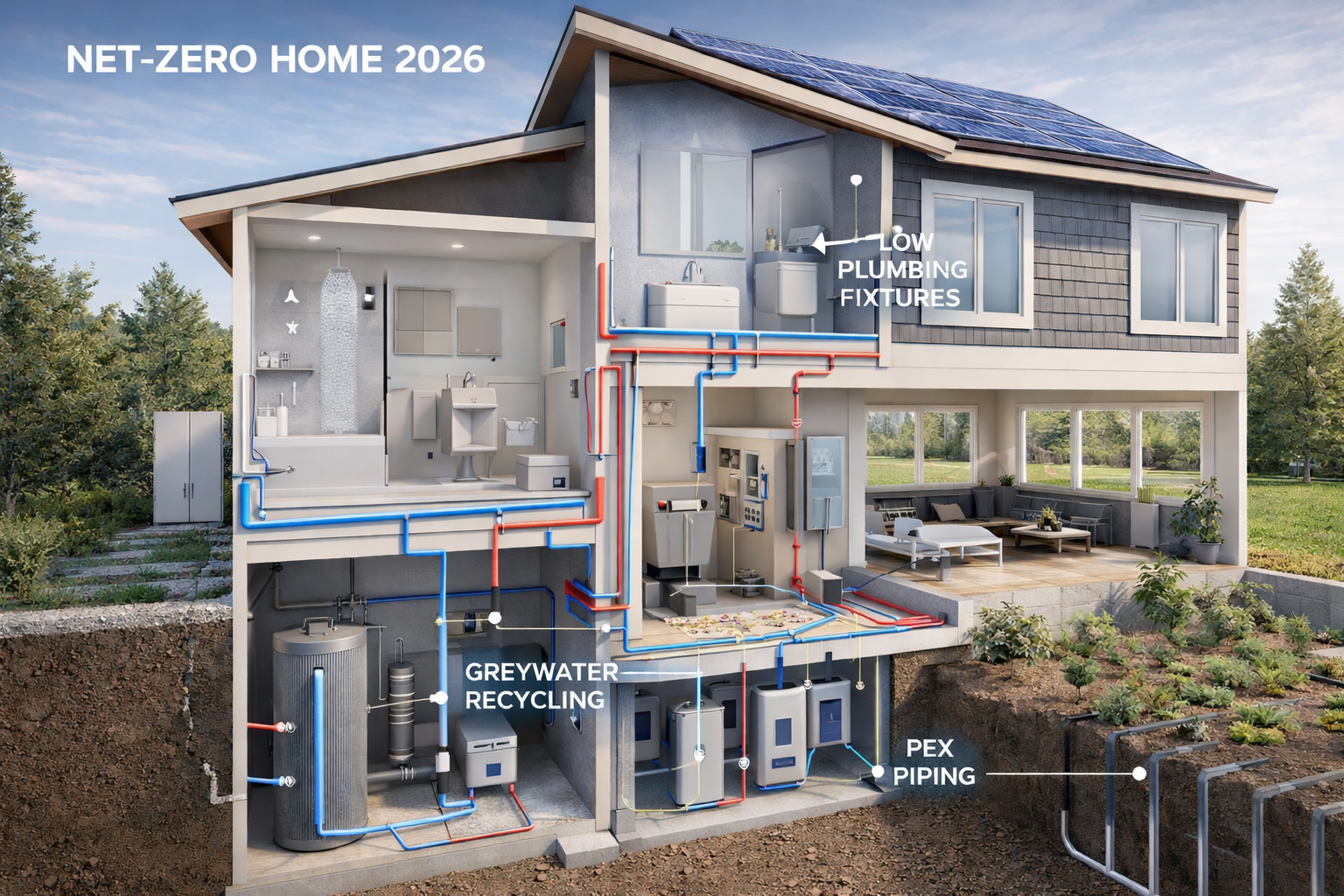
When most people picture a sustainable home in 2026, they imagine solar panels on the roof, triple-glazed windows, or a battery bank humming quietly in the garage. What rarely makes the mood board is the web of pipes hidden behind the drywall. Yet that invisible infrastructure — specifically how it is designed, sized, and vented — can be the single biggest determinant of whether a “green” home lives up to its promise.
That is where the International Plumbing Code (IPC) enters the conversation — quietly and without fanfare, as engineering tends to do.
What the IPC Actually Governs
The International Plumbing Code is the model code published by the International Code Council (ICC) that most U.S. states and many international jurisdictions adopt as the legal standard for residential and commercial plumbing installations. It covers everything from the minimum diameter of a drain pipe to the pressure tolerances of a water heater — details that sound dry on paper but translate directly into how much water a household wastes, and how safely waste leaves the building.
In 2026, two IPC-governed systems have moved to centre stage in the green-building conversation: greywater recycling and high-efficiency venting.
Greywater Recycling: Water Saved Is Money Earned
Greywater — the relatively clean wastewater from sinks, showers, and laundry — accounts for roughly 50 to 80 percent of a household’s total wastewater output. Modern greywater recycling systems route that water to toilet cisterns or outdoor irrigation, cutting potable water demand by up to 30 percent in a single-family home.
None of that works safely without code compliance. The IPC’s dedicated greywater chapter specifies surge capacity requirements, pipe material ratings, and mandatory air-gap distances that prevent cross-contamination with the drinking-water supply. Skip those details during a renovation and a well-intentioned water-saving feature becomes a public-health liability.
Venting: The Overlooked Engine of Plumbing Efficiency
Venting is plumbing’s least-photographed system and arguably its most consequential. A correctly vented drain stack maintains neutral air pressure throughout the drainage network, which means water flows at the designed rate without siphoning trap seals. Trap seals, in turn, are the only barrier between living spaces and sewer gases — including methane and hydrogen sulphide.
High-efficiency homes in 2026 increasingly rely on Air Admittance Valves (AAVs) — IPC-approved one-way mechanical vents that eliminate the need for a full vent stack penetrating the roof. Fewer roof penetrations mean better thermal performance and a simpler, cheaper build. But AAVs must be installed at IPC-specified heights and locations, or the pressure benefits disappear entirely.
Why Homeowners Need to Understand the Code
Designing a truly sustainable home in 2026 demands going beyond the cosmetic embellishments to the infrastructure that handles our most valuable resource: water. Choosing the appropriate faucets isn’t enough to achieve optimal efficiency in home plumbing; you also need to follow the International Plumbing Code’s stringent flow rate and pipe material specifications. Understanding these guidelines is critical for homeowners and restoration enthusiasts looking to handle their own projects. Many successful DIY-ers now use an IPC practice test as a self-audit tool. It helps them master the complex logic of venting and drainage before the first pipe is cut, ensuring their home meets the highest 2026 standards for both safety and sustainability.
A Green Home Is Only as Good as the Code It Follows
Sustainability certifications like LEED and NGBS award points for water-efficiency measures, but every measure they reward sits inside a framework that the IPC already mandates as a minimum. Put simply, code compliance is the floor — not the ceiling — of a genuinely green home. Skipping or misapplying even one IPC requirement can invalidate an entire greywater system, cause drainage failures that waste hundreds of gallons, or produce indoor air-quality problems that negate every other eco-friendly feature in the build.
In 2026, the homes that make the boldest sustainability claims will be the ones whose owners took the time to understand the plumbing code from the inside out. That is not glamorous work. But neither is ripping out a greywater system that never passed inspection.